NATIONAL LEAGUE SEASON PREVIEW: SCOTSTOUN STORM
9th January 2026
Storm ready to kick on with Mackellar’s arrival and a drive for 60-minute consistency
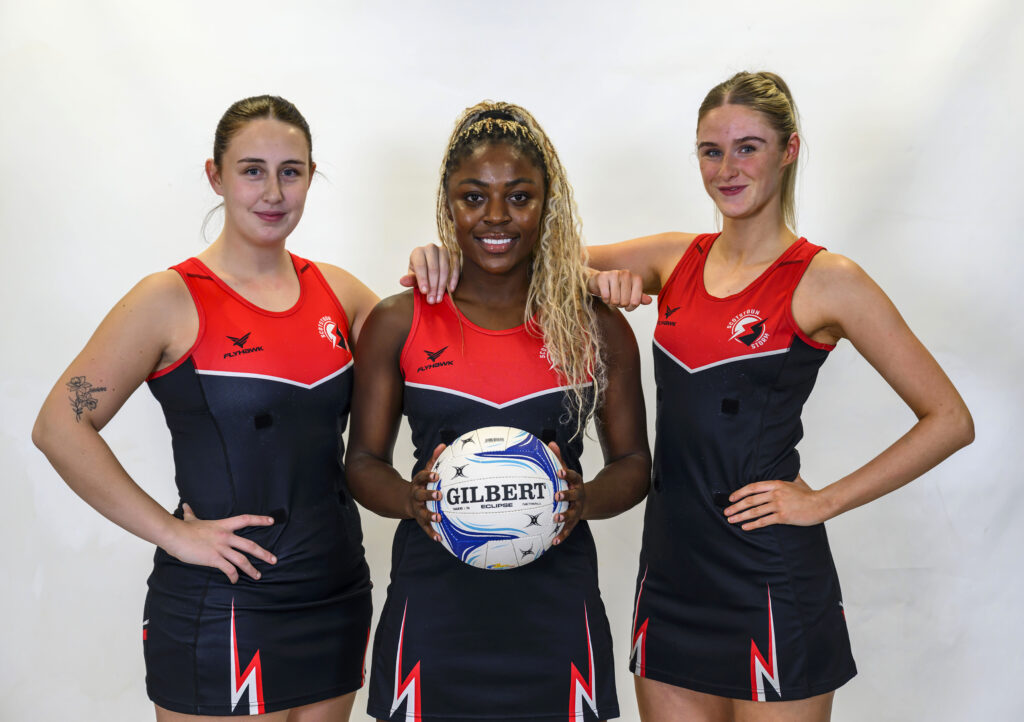
Scotstoun Storm head into the new National League season with a familiar core, fresh energy, and a big structural change that could unlock their next step: for the first time, the squad’s leaders can focus fully on playing, with Hayley Mackellar taking the reins on the sideline.
After a season where performances often showed real promise in quarters and halves, co-captain Erin Bolland says the mission is simple – turn strong moments into complete matches, and convert defensive work into scoreboard reward.
“We didn’t have the best starts last year, but we’ve been building through the early part of the season,” Bolland said. “Now it’s about going and taking on the teams and achieving better results.”
A new voice, a new perspective
The arrival of Mackellar as head coach is a major boost for Storm, especially after last season’s player-coach set-up. For Bolland and Savannah Antoine, it means a shift from juggling leadership, sessions and selection – to being able to play with clarity and full focus.
“We’ve got Hayley who’s our coach this year, so that’s been exciting,” Bolland explained. “It’s been Sav and I that have been coaching, so it will allow us to actually just play. Having Hayley coaching from the side will be a lot more beneficial for us.”
There’s also a practical advantage: removing any perception pressure around selection decisions when leaders are simultaneously part of the starting seven conversation.
“Sometimes it can look a bit biased if we’re putting ourselves in the starting seven,” Bolland said. “So to just take a step back from that and let Hayley take that one will be good.”
Antoine echoed the same point – and added that the shift supports individual growth as well as team performance.
“Yeah, I feel like it’s really [helping] develop my own game,” she said. “I am able to give my best to the rest of the team without having to think about what’s going on in other areas of the court and what sessions need to be made as well.”

www.craigwatson.co.uk
Why last year was hard – and why this year can be different
Storm’s first season at National League level came with a new kind of weekly intensity – and Bolland believes the squad is better placed now that those “first year” pressures are no longer unknown.
“Glasgow comp is a different environment,” she said. “In National League you’ve got people coming to watch you, you’ve got a live stream – different pressures that go into it.”
With that experience banked, Storm’s focus turns to consistency and conversion. Bolland is clear about what the team already does well – and what has to improve.
“I think we’re really solid in defence and we turn over a lot of ball,” she said. “It’s just converting and gaining something from it.”
She also pointed to scoring output as a key factor in last season’s results.
“We averaged around 39 goals last year,” Bolland said. “And that’s probably why it was hard to get a few more wins – you’ve got to be averaging around about 50.”
Importantly, she framed that challenge as a whole-team responsibility – not just pressure on the shooters.
“I’m not blaming it on anyone,” she said. “It may fall on the shooters to get the ball in the net, but what are we doing to help them out?”
Squad stability – plus youth, depth and new options
The group remains largely consistent, but Storm have strengthened with players stepping up and new personnel adding competition and flexibility.
“Fairly similar,” Bolland said of the squad, “but we’ve got some of the Under 19s stepping up this year… they’re a really good asset forn the squad. It’ll be nice to have some young guns and get them exposed to the national league environment.”
She also highlighted a new attacking addition settling in well.
“We’ve got Rosie (Meyer) coming from Glasgow Uni – she’s a great asset,” Bolland said. “The new players are fitting perfectly into the team and we get on so well with them.”
Antoine added that greater depth, especially through the shooting group, could be a major difference-maker across a condensed National League calendar.
“I feel like we’ve got a bit more depth in terms of goalers, which will be a huge help,” she said, noting that having extra options can reduce pressure and open up combinations.
Mackellar: weekly contact time, coaching input, and “hands on” development
For Mackellar, the opportunity to coach in Scotland’s National League is both new and exciting – and the chance to work with the Storm group on a weekly basis was key.
“I’m here in Glasgow for the next 6 to 8 months living,” she said. “For the first time ever I will get an opportunity to work with the players on a weekly basis, which is really nice for me – and also good for them.”
She also underlined the value of moving away from a player-coach model.
“Scotstoun didn’t have a coach – what they had was a player coach,” Mackellar said. “The opportunity was there for me to come in… now they don’t have to worry about playing and trying to run the tactics and all that. That is one of the hardest jobs: to be a player coach.”
Mackellar’s early focus is development – across emerging pathway talent and Scottish-based players eager for input.
“There’s some really exciting young players coming through the pathway.” she said. “It’s really good to work with Scottish-based players that just need some input, need some coaching – and could do really good things with a little bit more of that.”
Leadership: accountable, adaptable, and built on communication
Storm’s leadership group is vocal about standards – but also about understanding what different players need in the moment.
Bolland described a leadership style that begins off-court and adapts on-court.
“At times, yeah, I might be a bit more harsh with my words,” she said, “but I always follow up with something positive. There’s no need to be negative – because things we’re doing are things we can work on.”

www.craigwatson.co.uk
She also reflected on learning how teammates respond differently to feedback.
“The girls came back to me and said that’s the feedback they want,” she said. “So I do take on board what people need… knowing what people need on court is really important.”
Antoine described her approach as supportive but honest – and emphasised that accountability is part of their culture.
“I’m always encouraging when someone’s doing something well,” she said. “But I think it’s really important you also tell them when something’s not right – and that’s for myself as well.”
The group’s internal standard is clear: feedback stays professional.
“We do hold each other accountable,” Antoine said. “What is said on court stays on the court as well – it doesn’t affect personal relationships. We just really want what’s best for the team.”
Fast starts matter: pre-season, combinations, and hitting the ground running
With a shorter format and fewer games, the Storm know they can’t afford to build into the season slowly. Mackellar and the playing group see pre-season opportunities as essential for combinations, scouting, and confidence.
“It’s exciting,” Mackellar said. “Some of the teams that we’ll come up against will be really good.”
Antoine added that pre-season helps the group settle into new coaching rhythms and gives everyone a clearer picture of what’s ahead.
“Having a pre-season day will help with a new coach as well,” she said. “Hayley [gets] to see the new combinations… and it gives us that level playing field for when we then face each other.”