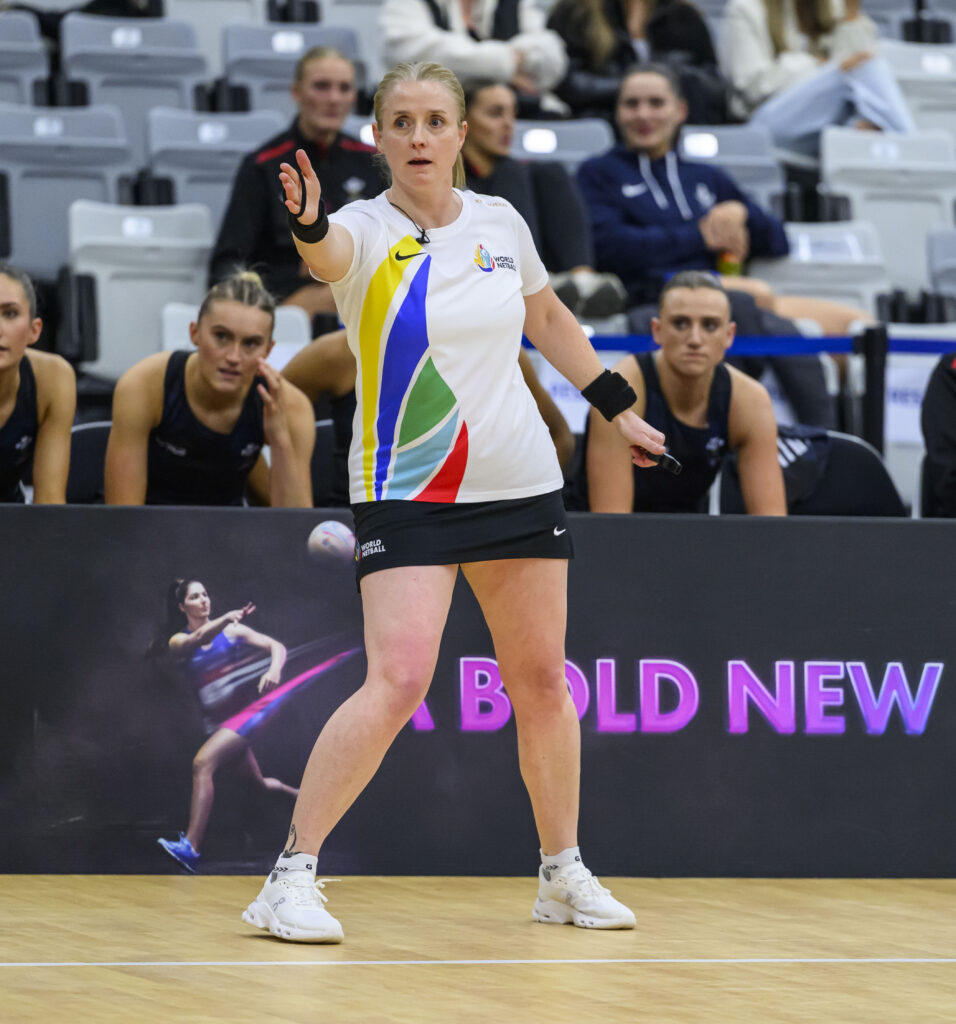
In the middle of it all: Gillian Leslie, the whistle, and the work behind the call
9th March 2026
From being a self-confessed “nightmare” player to becoming one of Scotland’s leading umpires, Gillian Leslie’s journey has been built on graft, curiosity and the kind of resilience most people never see from the sidelines.
There is a moment, every so often, when the pace of a sporting life catches up with the person living it.
For Scottish netball umpire Gillian Leslie, one of those moments came when she saw her name attached to a major appointment.
“It was a real pinch myself moment,” she says. “Am I reading that right? Is that my name being announced?”
It’s an instant that says a lot about her. There is pride, yes – and rightly so – but also a sense of disbelief that never tips into ego. speaks about her rise through officiating with warmth and honesty, the kind that makes you trust her immediately. She is ambitious but grounded. Driven, but generous about the people who helped her get there. Serious about standards, but still able to laugh at where it all began.
And where it began, as she tells it, was not some grand plan.
“A combination of 13 years ago, ‘try umpiring’… I’d been playing since 16,” she says. “I was a bit of a nightmare as a player… see if it’s easier on the other side – which it’s not – and then it escalated quickly from there.”
That line – which it’s not – lands with perfect timing. It’s funny, but it also captures something important. Gillian didn’t move into umpiring because she thought it would be the easier option. She moved into it because she loved netball, wanted to stay in the game, and discovered a different kind of challenge in the whistle. One that asked for composure instead of chaos. Precision instead of instinct. Authority without ego.
What followed was a journey that “escalated quickly,” in her words, but not by chance.
Building a Craft, Embracing the Pressure
If you ask Leslie what makes a good umpire, she doesn’t start with status or appointments. She starts with habits. Mindset. The things that don’t make headlines.
“Keep pushing yourself, no matter the level you’re at,” she says. “Having confidence, knowing the rules inside out, be curious, ask questions constantly of people who know better.”
It is a blueprint that sounds deceptively simple – until you realise how much discipline sits inside it. Know the rules inside out. Ask questions constantly. Keep pushing yourself. This is not the language of someone waiting to be discovered. It is the language of someone building a craft.
She is equally clear about the emotional side of the role.
“Be thick-skinned and confident that you are capable,” she says. “Be proactive about developing.”
That matters, especially in officiating, where visibility and invisibility exist at the same time. Umpires are central to the game, but often only noticed when decisions are contested. You are expected to be calm, consistent and accurate under pressure, then quietly move on to the next game and do it all over again. There is nowhere to hide, and very little room for self-pity.
Leslie not only understands that reality – she seems to thrive on it.
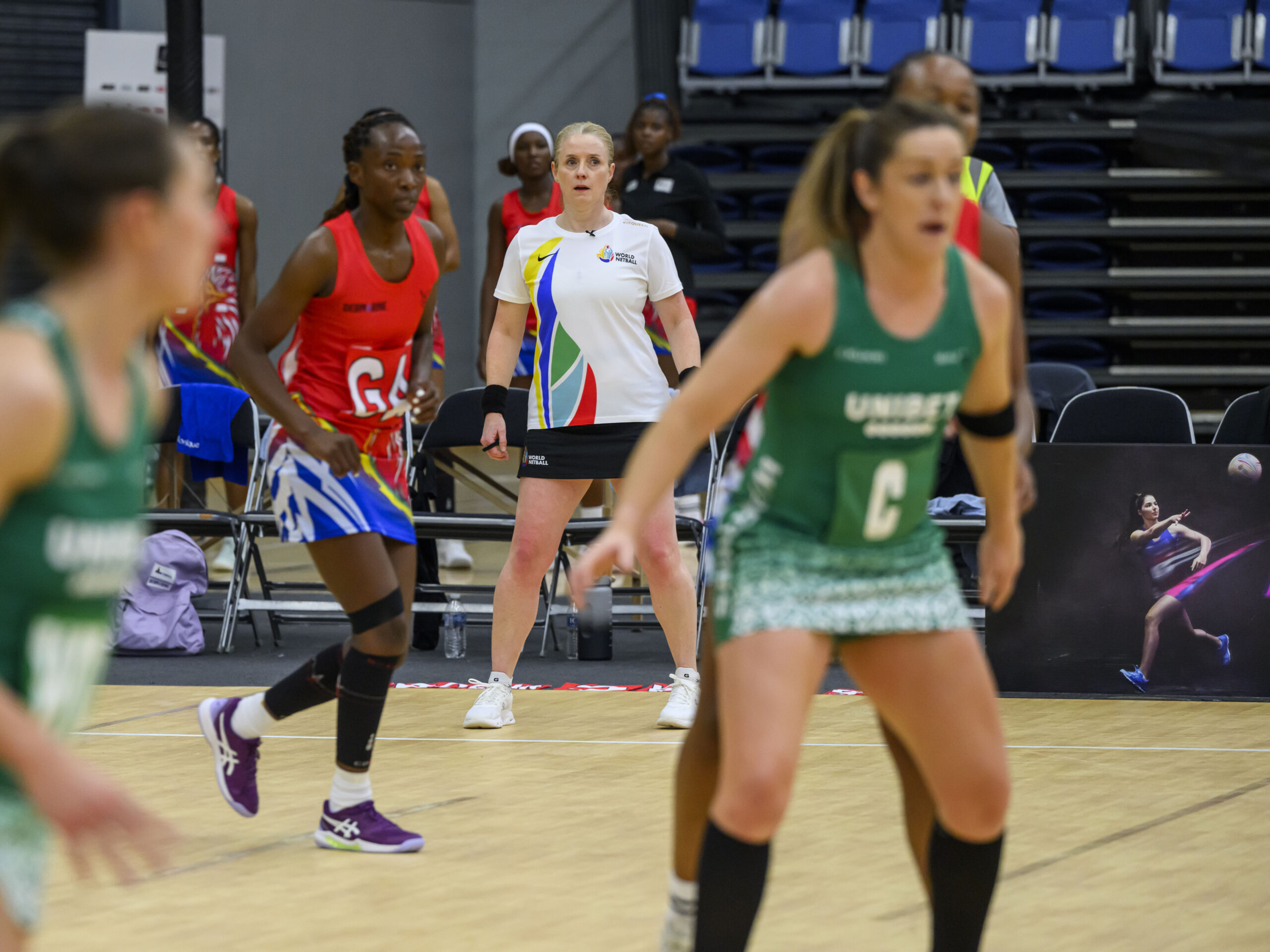
She describes making as “a surreal moment,” and when she talks about the higher levels of officiating, there is a spark that comes through immediately. “I have been fortunate to represent my country at a selection of World Netball tournaments now, including The 2025 Netball World Youth Cup. First and foremost, I consider it a privilege and I don’t ever lose sight of that.”
“I like the pressure of it, I like the decisions,” she says. “Even being considered for the World Cup or ITID. Getting umpire awards – you’re doing what you do because you love it.”
That phrase – I like the pressure – tells you almost everything. Some people tolerate pressure because it comes with opportunity. Gillian sounds like someone who has learned to meet it head-on and make sense of herself within it. Not because it is easy, but because it is meaningful.
www.craigwatson.co.uk
Recent appointments have brought some unforgettable moments, including the Celtic Cup in Glasgow, where the setting added another layer to the experience.
“Umpiring at home in front of your peers, friends and family is brilliant,” she says. “You’re meant to be in the background but it was certainly amazing to officiate high-ranking teams and it was a great experience.”
It is a lovely description of an umpire’s paradox. You are meant to be in the background – and yet the responsibility is huge. The players are elite, the pace is relentless, the margins are fine, and every call matters. To do that in your home city, in front of people who know you, is both a privilege and a test.
The Team Behind the Whistle
What comes across strongly in Leslie’s reflections is how little she sees any of it as an individual triumph. Again and again, she comes back to support.
“All the pathway umpires were there to support [me],” she says. “You do need your support group and friends who stick by you.”
That support network is not just emotional; it is practical, technical and ongoing. Leslie speaks in detail about how modern officiating is assessed and analysed, and the way she describes it sounds far closer to an athlete’s performance review than many people might expect.
“We are getting assessed, graded and ranked, so we are quite similar to coaches and players in how we analyse the game,” she explains. “There are statistics that measure our progress, we get links to games and get feedback after the game.”
In other words: this is elite performance, not guesswork.
Her mentor plays a key role in that process, constantly helping her set and review goals.
“My mentor Anne Abriatis helps with goals for game, season – why did you get there, why did you not.”
It is a brilliantly revealing line. Why did you get there, why did you not. Not just what happened, but what caused it. Not just outcomes but understanding.
Gillian also draws on a wider circle of trusted people, including peers and experienced officials who have navigated similar stages themselves.
“Mentors include good friends who have been at similar levels, and I have pulled assistance from all areas including Louise Travis and talking to other international umpires,” she says. “It is a team thing within the umpire group.
“I pick from loads of different people to help, and adapt it for me.”
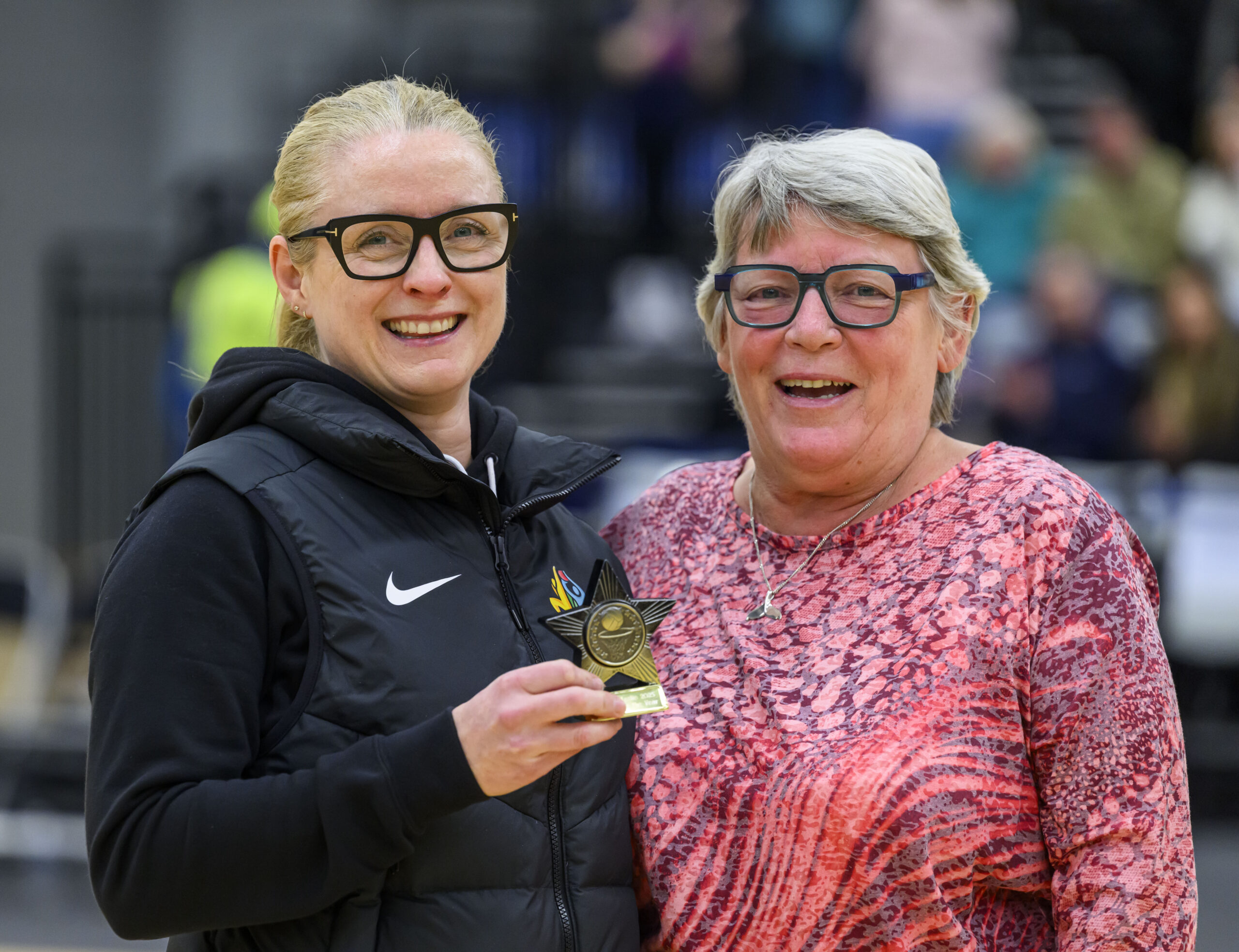
www.craigwatson.co.uk
That last part matters. She isn’t collecting advice for the sake of it; she is filtering it, shaping it, turning support into something usable. It is another sign of a high performer: openness to learning, but ownership of the process.
Of course, none of that happens in a vacuum. Like many people in netball, Leslie balances the demands of officiating with a full-time job – and she is refreshingly honest about what that actually looks like.
“There are times when it’s not easy and you are up at stupid o’clock to go to the gym,” she says. “My day is scheduled to the minute, the admin side of it adds up and can be really tricky at times.”
There is no glamour in “stupid o’clock,” and that is exactly why it hits. This is the part of the story that often goes untold: the early alarms, the life admin, the planning, the fatigue, the trade-offs. The things that do not show up in a match report but make elite performance possible.
Leslie works at Glasgow Clyde College, and when she talks about the support she has received there, her appreciation is clear.
“The workplace have been brilliant,” she says. “Colleagues working with me and supporting me constantly. I always check with the workplace first, [they] have been amazing with their support, and showing real interest in my progression, students included, they know a bit about it.”
It is easy to picture it: colleagues asking how a tournament went, students following updates, people quietly cheering on her progress. In a sport built on communities, that kind of everyday support matters more than people sometimes realise.
It also feeds into another part of Gillian’s story – the example she sets for others coming through.
When asked about being a role model, she doesn’t reach for big statements. Instead, she describes the kind of environment she wants to create around her.
“I hope I come across as professional,” she says. “I hope people are comfy around me, I try and make people feel included whenever they’re around me.”
There is something deeply netball about that answer: standards and inclusion, side by side. You can be exacting and still be kind. You can lead and still make space for other people. Leslie’s version of professionalism is not distant; it is welcoming.
She is more direct when the conversation turns to confidence and belonging at the top end of the game.
“If you’re the best for the job why shouldn’t you be there? I’ve worked hard to be here,” she says. “I hope they take on board that if they keep working hard they can make it.”
It is a powerful message, particularly for younger umpires who may still be trying to imagine themselves in high-performance environments. Leslie does not present success as something reserved for “other people.” She presents it as something earned through work, reflection and persistence.
And still, for all she has achieved so far, she is not done dreaming.
Asked for her “magic wand” moment, she doesn’t hesitate.
“Getting my INUA (International Netball Umpire Award- the highest possible level) would be outstanding,” she says, “and you’re entrusted with these elite players. To see what I’ve done and the sacrifices that I’ve made, not going to this, or that, time away from the family and the house, would be worth it. It also opens the possibility to travel further afield to places such as New Zealand, Australia and Africa.”
It is an honest answer, and a moving one. Not because it is dramatic, but because it acknowledges the cost as well as the ambition. The missed things. The choices. The quiet sacrifices that sit behind a public milestone.
That is what makes Gillian Leslie’s story so compelling. Yes, it is about appointments, progression and recognition. But it is also about something more universal: what it looks like to commit to your craft, keep learning, and build something slowly, even when most of the work happens out of sight.
Umpires are often described as being “in the background.” In one sense, that is true. The game is for the players. The spotlight should be on the contest.
But the journey that gets someone to the middle of that court – calm under pressure, trusted with the call, prepared for the moment – is a story in its own right.
And Gillian Leslie’s is one worth telling.